
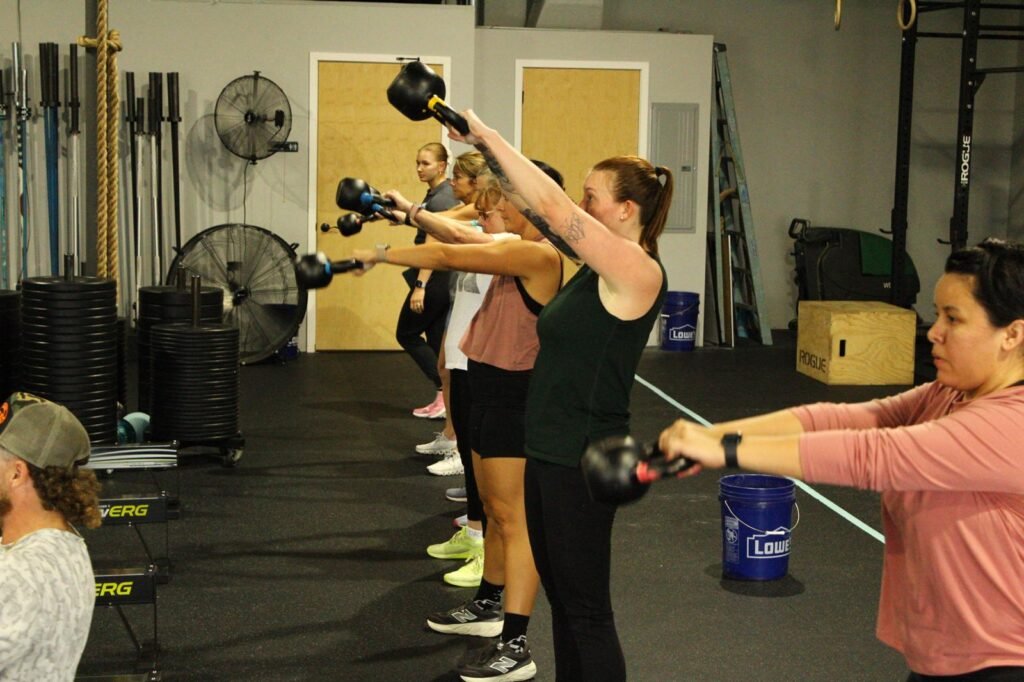
Fitness is at the center of what we do.
To Tilla Fit, fitness isn’t optional.
It’s something that every person needs.
Over the past year, we shared 52 reasons WHY people need fitness.
Now we shift to the next question.
HOW do you start?
HOW do you stay consistent?
HOW do you build a lifestyle that lasts?
HOW do you get results?
Over the next 52 weeks, we’ll answer those questions.
Here is week 21 of 52 on HOW to approach fitness.
“How to Hinge”
Over the past two weeks, we’ve learned how to squat and how to press.
This week, we’re introducing another fundamental movement that everyone should be practicing.
The Hinge.
Think about how often you bend over throughout your day.
Picking up groceries.
Grabbing a laundry basket.
Lifting your kids.
Picking something up off the floor.
These activities all require some variation of hinging.
And just like squatting and pressing, our ability to perform this movement confidently becomes increasingly important as we age.
Why Should Everyone Be Hinging?
Hinging primarily strengthens what’s known as our posterior chain.
These are the muscles along the backside of our body.
Our glutes.
Hamstrings.
And the muscles supporting our spine.
These muscles help us stand, walk, run, jump, lift objects, and maintain control of our bodies.
Developing strength through our hips is incredibly important for maintaining independence and physical capability as we age.
Step 1: Learn the Good Morning
One of our favorite ways to teach the hinge is through a movement called the Good Morning.
Despite the name, you can perform this exercise at any time of day!
Here’s how to perform it:
1. Find Your Stance
Start with your feet approximately hip-width apart.
Keep your feet planted firmly on the ground.
2. Slightly Bend Your Knees
Unlock your knees, but don’t continue bending them as if you’re performing a squat.
We want most of the movement coming from your hips.
3. Push Your Hips Backward
Imagine you’re trying to close a car door behind you using your butt.
Push your hips backward while allowing your chest to lean forward.
4. Maintain Control of Your Spine
Keep your stomach braced and your back in a comfortable, controlled position.
Avoid deliberately rounding or excessively arching your lower back.
5. Stand Tall
Once you’ve reached a comfortable depth, push through your feet and bring your hips forward to stand.
Squeeze your glutes as you finish without leaning backward.
That’s a Good Morning!
You can begin with just your bodyweight or your hands across your chest.
Step 2: What If You’re Struggling to Hinge?
Here’s something we remind our members of all the time.
You don’t need to perform the hardest version of a movement to benefit from it.
For some people, separating the hinge from the squat can be challenging.
They bend their knees too much.
They round their back.
Or they simply struggle to understand how their hips should move.
That’s where the PVC Hinge comes in.
Grab a PVC pipe or broomstick and place it vertically along your back.
Try to maintain three points of contact:
The back of your head.
Your upper back.
Your tailbone area.
Now practice pushing your hips backward while maintaining those three points of contact.
The PVC pipe provides immediate feedback and helps you recognize when your torso position changes.
Start with a small range of motion and gradually increase it as your coordination improves.
Step 3: Ready for More? Try the Deadlift
Once you’ve developed confidence with the Good Morning, it’s time to introduce some resistance.
One of our favorite ways to challenge the hinge is through the Deadlift.
The Deadlift is one of the most effective movements for developing total-body strength.
It challenges your glutes, hamstrings, back, grip, and core.
And it closely resembles something we do throughout our lives.
Picking something heavy up off the ground.
Here’s how to perform it:
1. Start With the Weight Close
Position a dumbbell, kettlebell, or barbell close to your body.
2. Hinge Backward
Push your hips backward and bend your knees enough to reach the weight.
3. Brace Your Body
Tighten your stomach, keep the weight close, and prepare to stand.
4. Stand Tall
Push through your feet and extend your hips and knees until you’re standing upright.
5. Lower With Control
Reverse the movement, sending your hips backward and returning the weight toward the floor.
Start with a manageable weight and gradually increase the challenge as your technique and strength improve
Step 5: What If Hinging Bothers Your Back?
This is an important conversation.
Some people avoid hinging because they’ve experienced back discomfort or have been told that bending over is dangerous.
But avoiding the movement entirely isn’t always the best long-term solution.
Our bodies are designed to bend, lift, and move.
The goal is to find a variation and level of resistance that you can tolerate and gradually build confidence with.
Maybe that means starting with the PVC Hinge.
Maybe you shorten your range of motion.
Maybe you begin with a very light Good Morning.
If a movement causes persistent or worsening pain, seek guidance from a qualified healthcare professional.
The goal is to develop confidence in movement, not fear of movement.
The Tilla Fit Movement Library
We’re continuing to build our free Movement Library on YouTube!
We’ve organized demonstrations by movement category, including an entire collection dedicated to hinging.
From Good Mornings and PVC Hinges to Deadlifts and more advanced variations, we’re building a resource you can use to learn new movements and improve your technique.
Whether you’re training at home, working out in an open-access gym, or simply looking for something new to try, we want this resource to help.
Head over to our YouTube channel and explore the Hinge playlist.
This Week’s Challenge
Find five minutes and practice your hinge.
Start with 10 Good Mornings.
Focus on pushing your hips backward while maintaining control of your torso.
If you’re struggling, grab a PVC pipe or broomstick and practice 10 PVC Hinges.
If you’re confident with the movement, try 10 light Deadlifts.
Finally, visit the Tilla Fit Movement Library and explore another hinge variation.
Because just like squatting and pressing, hinging isn’t something we only do in the gym.
It’s a movement we need for life.
Learn to hinge well.
Build strength through the movement.
And maintain the ability to confidently pick things up, move your body, and enjoy the activities you love for decades to come.